Blog
Belly Dump vs. End Dump Trailers: Which Fits Your Hauling Job?
How belly dump and end dump trailers differ in unloading method, jobsite fit, and capacity, and what to check before buying either at auction.
Published
Category

Latest auction
2015 Serco 8500
Subscribe to Updates
Get monthly insights on equipment values, market trends, and selling strategies. Real advice, no spam.
Belly dump and end dump trailers both move bulk material, but they unload in fundamentally different ways, and that difference shapes which jobs each trailer type actually fits well. Choosing the wrong configuration for a given hauling job does not just create inconvenience; it can slow down an entire paving or grading operation that depends on a specific unloading method. Understanding how each trailer works, and where their strengths and limitations lie, helps buyers match equipment to the work they actually haul.
How Belly Dump Trailers Unload Material
Belly dump trailers release material through gates in the bottom of the trailer while the truck continues moving forward, spreading material in a controlled windrow along the ground. This makes belly dumps the preferred choice for road base, asphalt millings, and aggregate spreading where an even, continuous layer of material needs to be laid down without stopping. Because the truck does not need to raise the trailer bed, belly dumps can unload without needing significant overhead clearance, which matters on jobs with power lines, tree cover, or other overhead obstructions.
How End Dump Trailers Unload Material
End dump trailers lift the front of the bed hydraulically, allowing the entire load to slide out the rear gate in a single pile. This method is faster for depositing a full load in one location, making end dumps well suited for stockpiling material, filling large excavations, or dumping directly into a hopper or crusher. Because the material comes out as a pile rather than a spread windrow, end dumps are less useful for road base spreading but more efficient when the goal is simply moving volume from one point to another as quickly as possible.
Jobsite fit often comes down to overhead clearance and the nature of the unloading task. End dump trailers require enough vertical clearance to raise the bed fully, which can be a real limitation on sites with power lines, low structures, or tree canopy. Belly dump trailers avoid this issue entirely since they unload from underneath while moving, but they require a longer, relatively clear path to lay material in a windrow, which can be impractical in tight urban sites or confined excavation areas.
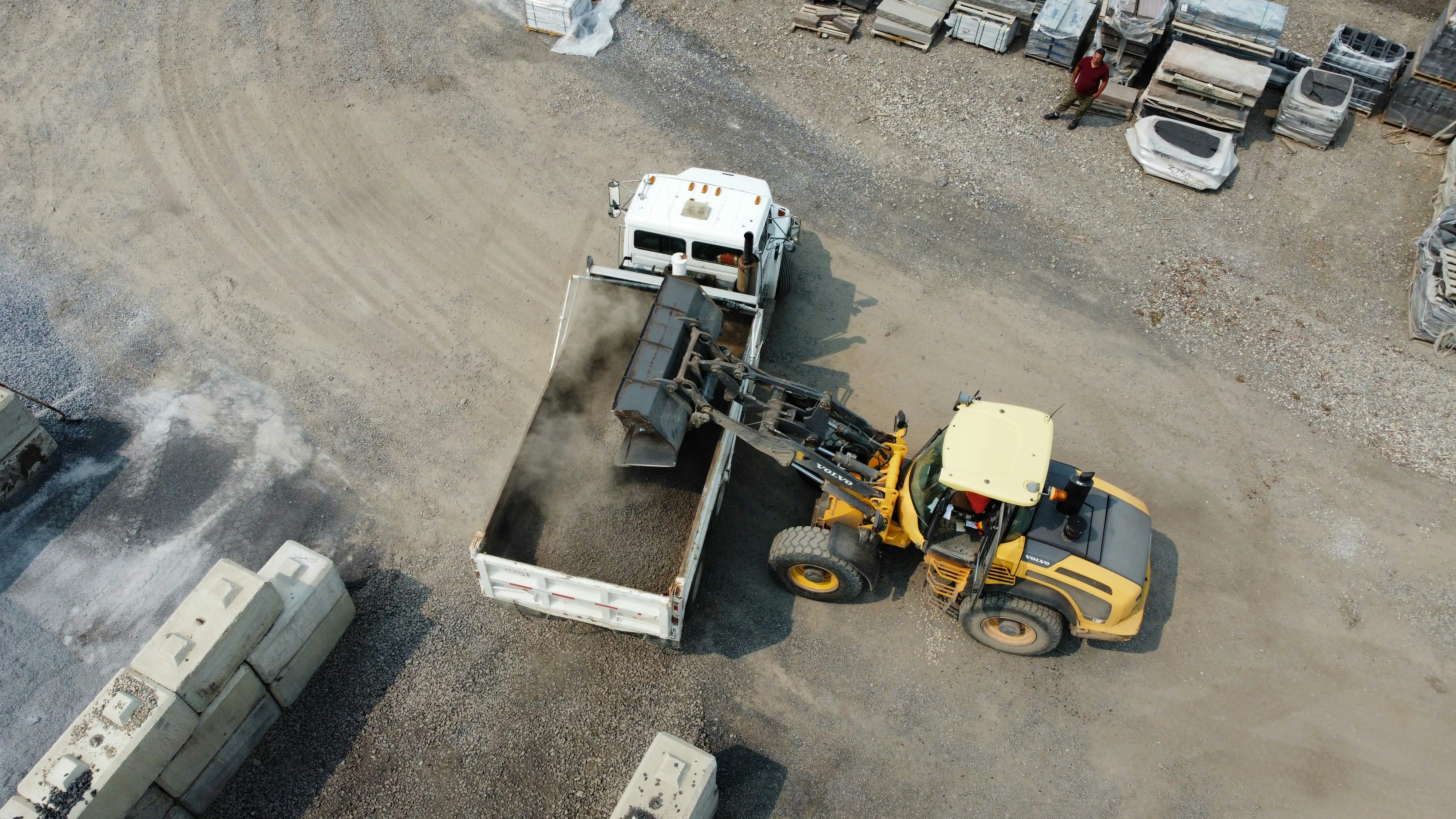
Productivity differences show up most clearly on paving and road construction projects. A belly dump can unload material continuously while paving crews work behind it, keeping a steady supply of base material moving without stopping traffic flow on the jobsite. An end dump moving the same material would need to stop, raise the bed, dump a pile, and then have that pile spread separately by a loader or grader, adding an extra step and slowing the overall pace of the operation. For projects centered on spreading rather than piling, that difference can meaningfully affect how many loads a crew can move in a day.
Jobsite Fit and Productivity Differences
Stability and safety considerations differ between the two trailer types as well. End dump trailers have a higher center of gravity when the bed is raised, which creates rollover risk on uneven ground or in windy conditions, and operators need to be trained to fully assess ground conditions before raising the bed. Belly dump trailers keep a lower center of gravity throughout the unloading process since the bed itself never lifts, which generally makes them a safer option on uneven or soft ground where an end dump might be at higher risk of tipping.
Capacity and payload considerations also factor into the decision. End dump trailers, particularly tandem and tri-axle configurations, often carry slightly higher payload capacities and are common in aggregate and demolition hauling where maximum volume per trip matters most. Belly dump trailers, especially in double and triple configurations pulled by a single tractor, can also move significant volume efficiently over longer hauls, making them a strong choice for operations moving large quantities of base material across distance rather than within a single confined site.
When inspecting a used belly dump trailer, focus closely on the condition of the discharge gates, seals, and the hydraulic or mechanical linkage that operates them. Worn gate seals lead to material leaking during transport, while a gate that does not open and close fully can create uneven unloading or leave material trapped inside the trailer. Check the frame and cross members for corrosion or cracking, since the constant vibration from gate operation and load shifting puts real stress on the trailer structure over time.
Inspection Points Before Buying Either Type
When inspecting a used end dump trailer, prioritize the hydraulic hoist cylinder and its mounting points, since this is the component most likely to fail and the most expensive to replace. Check for hydraulic fluid leaks, uneven lifting, and any signs of frame twisting or stress cracking near the hoist mounting area, which can indicate the trailer has been operated on uneven ground or overloaded in the past. On both trailer types, tires, brakes, and axle condition deserve the same attention as on any heavy trailer, since these components carry significant weight when loaded and directly affect safe operation on the road.
Neither belly dump nor end dump trailers are universally better; each is built around a specific unloading method that fits certain jobs far better than others. Operations focused on spreading base material or paving benefit from the continuous, controlled unloading of a belly dump, while operations centered on stockpiling, filling, or maximum single-load volume are usually better served by an end dump. Matching the trailer to the actual hauling task, rather than defaulting to whichever type is more familiar, produces the most efficient and cost-effective result on the job.
Other Blogs