Blog
Hay Equipment Guide: Balers, Mowers, and Rakes Explained
A practical overview of hay mowers, rakes, and balers, how each fits into the haymaking process, and what to check before buying used equipment.
Published
Category

Latest auction
2015 Serco 8500
Subscribe to Updates
Get monthly insights on equipment values, market trends, and selling strategies. Real advice, no spam.
Making hay is a sequence, and each piece of equipment in that sequence has a specific job. Mowers cut the crop, rakes gather and condition it for drying, and balers compress it into a form that can be stored and transported. Understanding what each machine actually does, and how the pieces work together, makes it much easier to evaluate used equipment and build a hay operation that matches the acreage and crop type you are working with.
Hay Mowers: Disc, Drum, and Sickle-Bar Types
Mowers come in several configurations, but the most common types are disc mowers and drum mowers, along with older sickle-bar mowers still found in the used market. Disc mowers use overlapping rotating discs with knives to cut hay cleanly at higher ground speeds, and they handle heavier or tangled crops better than sickle-bar designs. Many disc mowers are also available as mower-conditioners, which crimp or crush the stems as they cut to speed up drying time. Sickle-bar mowers are simpler, lighter, and less expensive to maintain, but they cut more slowly and can struggle in heavy or lodged hay.
Hay Rakes: Wheel Rakes vs. Rotary Rakes
Rakes gather cut hay into windrows for baling and, in the case of tedders and some rake designs, help spread and fluff hay to speed drying. Wheel rakes use a series of ground-driven wheels with tines to gently roll hay into a windrow with minimal soil contact, making them a common choice for operations focused on hay quality. Rotary rakes use powered rotors with tines to move larger volumes of hay quickly and can merge multiple swaths into a single windrow, which is useful for large-square or large-round baling operations that need substantial windrow volume to run efficiently.
Choosing the Right Hay Baler for Your Operation
Balers are typically the most expensive piece of hay equipment and come in three main categories: round balers, small square balers, and large square balers. Round balers produce compact, weather-resistant bales that are easy to handle with a single operator and a loader, making them popular for livestock operations feeding their own herds. Small square balers produce lighter, stackable bales preferred by horse owners and retail hay markets, though they typically require more labor to handle and stack. Large square balers produce dense, uniform bales suited for long-distance hauling and large-scale commercial hay sales, but they demand significant horsepower and a larger capital investment.
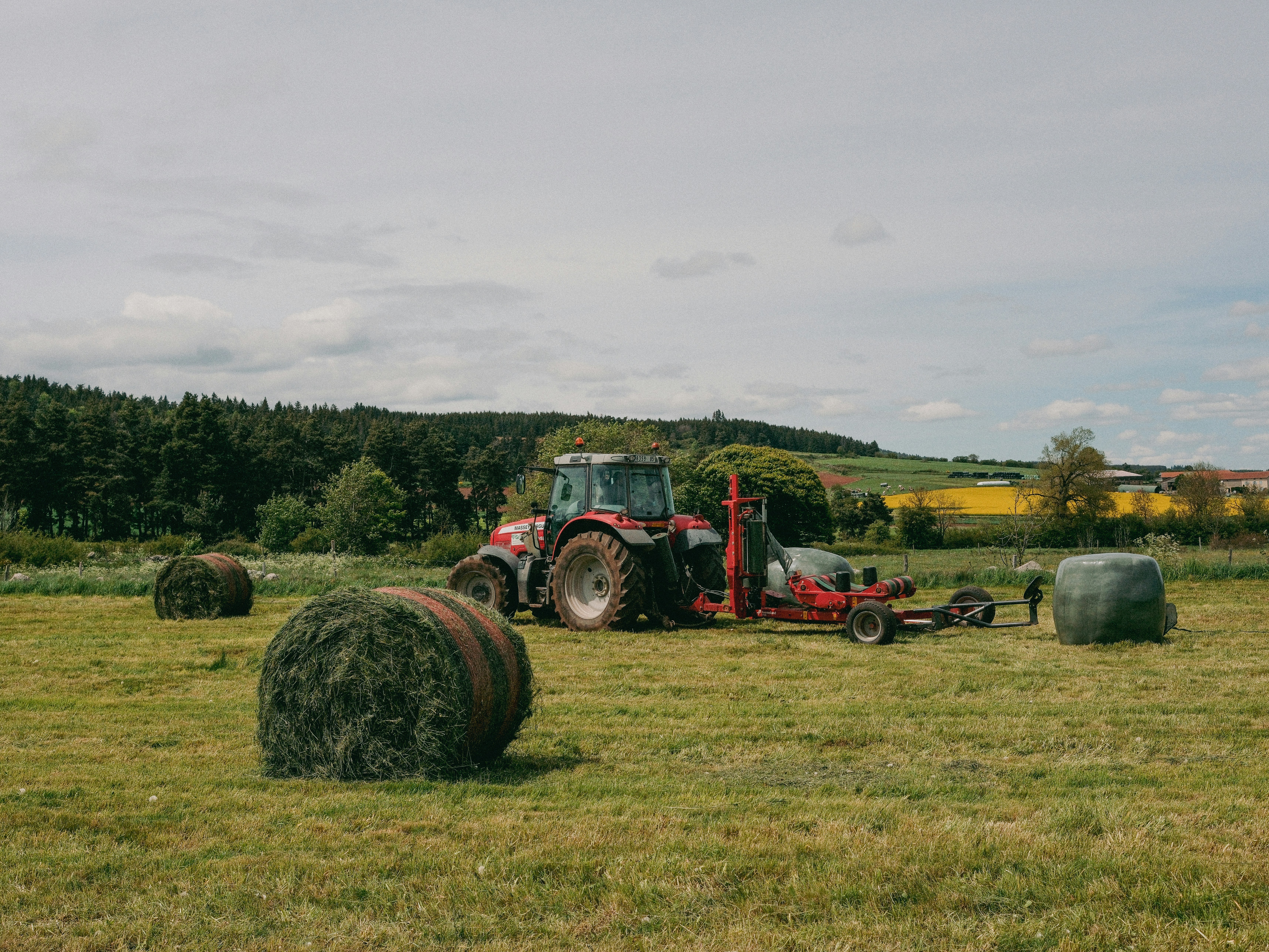
Twine and net wrap systems on balers matter more than many buyers initially realize. Net wrap systems apply plastic netting around round bales quickly, reducing spoilage and shedding water better than twine, but they add plastic waste that must be removed before feeding and add cost per bale. Twine wrap costs less per bale and avoids plastic disposal but takes longer to apply and offers less weather protection for outdoor-stored bales. When evaluating a used round baler, check the condition of the wrap system, including belts, chains, and net wrap rollers, since worn components in this system directly affect bale quality and machine uptime.
Inspecting Wear Parts on a Used Hay Baler
Belts and chains inside a round baler deserve close inspection when buying used. Round balers use a belt system to form and roll the bale, and worn, cracked, or improperly tensioned belts lead to poor bale shape, slippage, and increased downtime. Square balers rely heavily on a plunger and knotter or knitter system for large squares, and knotter condition is one of the most important wear points to inspect, since a poorly functioning knotter results in bales that fall apart in transport or storage.
Pickup mechanisms and tine condition affect performance across all baler types. Balers use a pickup reel with spring-loaded tines to lift cut hay from the windrow into the baling chamber. Bent, missing, or excessively worn tines reduce pickup efficiency and can leave hay behind in the field, directly reducing yield captured per acre. Rotate the pickup by hand if possible during inspection and look for smooth operation without excessive play in the bearings or drive components.
Mower knife and disc condition should also be checked closely, since dull or damaged cutting components increase fuel consumption and produce a rougher, less consistent cut that affects both yield and hay quality. Inspect gearboxes for oil leaks and listen for unusual noise if the mower can be run during inspection. Conditioner rolls, when present, should turn freely and show even wear across their length rather than concentrated wear in one section, which can indicate misalignment.
Matching Hay Equipment to Your Acreage
Matching equipment to acreage and crop type prevents both under- and over-investment. A small operation cutting a limited number of acres for personal livestock may do well with a simple sickle-bar mower, wheel rake, and round baler combination that keeps costs low. A larger commercial hay operation moving significant tonnage will benefit from a mower-conditioner, rotary rake, and large square baler that maximize throughput and hay quality for market sale, even though the upfront investment is considerably higher.
Buying used hay equipment rewards careful inspection of wear components rather than a focus on headline features alone. Belts, chains, knotters, tines, and cutting components all wear based on actual use and maintenance quality, not just age. A methodical walk-through of each machine in the haymaking sequence, paired with a clear understanding of how mowers, rakes, and balers work together, helps buyers choose equipment that fits their acreage, crop, and market goals without overspending on capacity they do not need.
Other Blogs


