Blog
Mini Excavator vs. Standard Excavator: Which Size Fits Your Job?
A practical comparison of mini and standard excavators, covering jobsite access, digging depth, transport, and how to size the right machine for the work ahead.
Published
Category

Latest auction
2015 Serco 8500
Subscribe to Updates
Get monthly insights on equipment values, market trends, and selling strategies. Real advice, no spam.
Choosing between a mini excavator and a standard excavator is one of the most common sizing decisions contractors, landscapers, and rental fleets face. Both machines dig, lift, and grade, but they are built for different jobsite realities. The right choice depends less on brand or horsepower and more on access, depth, weight limits, and the type of work planned for the next several seasons. Understanding those differences before buying or bidding at auction can save money on the front end and prevent costly mismatches on the job.
Mini excavators, generally defined as machines under 10 tons, are built for tight spaces and lighter-duty digging. Their compact footprint allows them to move through gates, work inside finished yards, operate on sidewalks, and maneuver in basements or crawl spaces that a full-size machine could never reach. Zero-tail-swing models add even more flexibility near walls, fences, and parked vehicles. This makes mini excavators the preferred choice for residential landscaping, utility trenching, small demolition, and any job where the surrounding property needs to stay intact.
Standard excavators, typically 20 tons and above, are built for volume. They dig deeper, lift heavier loads, and move material faster than a mini excavator ever could. A standard machine can carry larger buckets, run heavier attachments, and hold up to continuous, all-day production work on grading, mass excavation, and utility installation projects that involve significant cubic yardage. If the job requires deep foundation work, large pipe installation, or moving thousands of yards of material, a standard excavator will almost always outperform a mini machine on cost per yard moved.
Digging depth is one of the clearest differentiators. Most mini excavators reach digging depths between six and twelve feet, which covers the majority of residential and utility trenching needs. Standard excavators regularly exceed fifteen to twenty feet, making them necessary for deep basements, large culverts, and heavy civil work. Before choosing a machine, measure the deepest point required on the job and add a safety margin. A machine that barely reaches the required depth will struggle with efficiency and may require constant repositioning.
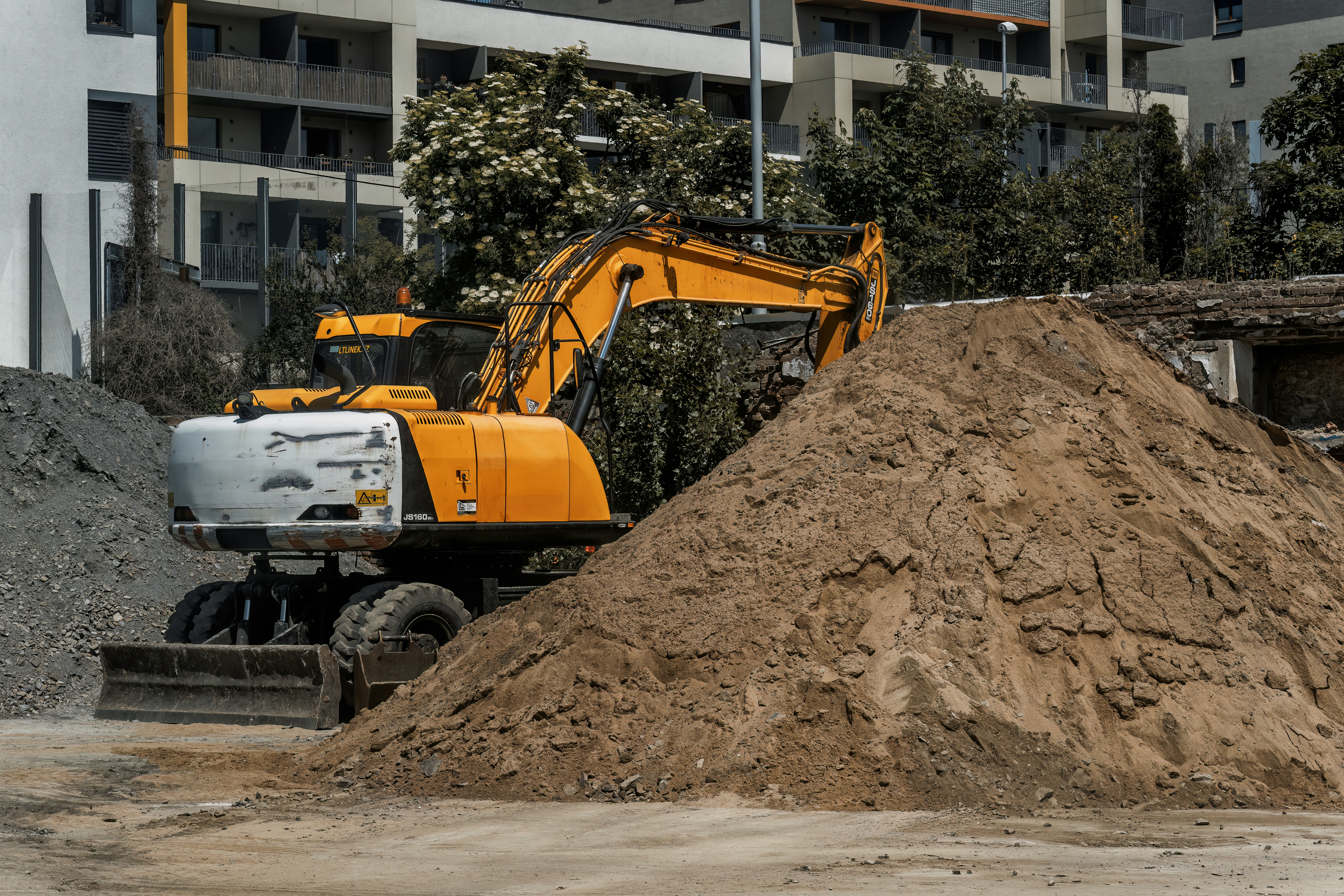
Transport and logistics also separate these two categories. Mini excavators can often be hauled on a tag-along trailer behind a pickup truck, which reduces transport cost and lets a single operator move the machine between job sites without a dedicated trailer or CDL requirement. Standard excavators require a lowboy trailer, a properly rated tow vehicle, and often permits depending on width and weight. For contractors running multiple small jobs across a service area, that transport difference can add up quickly in both time and cost.
Ground disturbance is another factor worth weighing. Mini excavators exert less ground pressure and are easier to operate on finished lawns, sensitive utility corridors, or areas where restoration costs matter. Standard excavators, especially tracked models, can leave a heavier footprint and require more restoration work after the job. For projects near existing structures, hardscaping, or irrigation systems, the lighter footprint of a mini excavator can reduce the risk of collateral damage and the cost of repairing it afterward.
Attachment versatility should factor into the decision as well. Both classes support augers, thumbs, breakers, compaction plates, and grading buckets, but the available attachment size and hydraulic flow differ significantly. A standard excavator can run larger breakers and heavier-duty attachments that would overwhelm a mini excavator’s hydraulic system. If a business plans to expand into larger-scale demolition or heavy grading work, investing in a machine with the hydraulic capacity to support bigger attachments may be the better long-term decision, even if current jobs do not require it yet.
Operating cost is often overlooked until the fuel and maintenance bills arrive. Mini excavators are generally less expensive to fuel, maintain, and insure, and parts availability tends to be broad given how common these machines are in the used market. Standard excavators cost more to operate per hour but move far more material per hour, which can make them more economical on large jobs despite the higher hourly rate. Calculating cost per yard moved, rather than simply hourly rental or ownership cost, gives a clearer picture of which machine actually saves money for a specific type of work.
For buyers evaluating used equipment at auction, both categories can offer strong value, but the inspection priorities differ. On mini excavators, check undercarriage wear, hydraulic hose condition, and boom pin wear since these machines often see repetitive, tight-radius movement. On standard excavators, pay closer attention to engine hours, final drive condition, and structural wear on the boom and arm given the heavier loads they typically carry over their service life. In both cases, service records and a clear description of recent repairs make it easier to bid with confidence.
There is no universal answer to which excavator size is right. A landscaping company working in finished residential yards will get more value from a mini excavator’s access and lower ground impact. A utility contractor installing deep trunk lines will need the depth and production speed of a standard machine. Many growing operations end up owning both, using the mini excavator for detail work and the standard excavator for volume production. The best approach is to map the next year of anticipated jobs against depth requirements, access constraints, and material volume, then match the machine to that reality rather than buying based on size alone.
Other Blogs


